Does Your Wardrobe Actually Like You Back? A Gut-Check for the Pieces You Keep Holding Onto
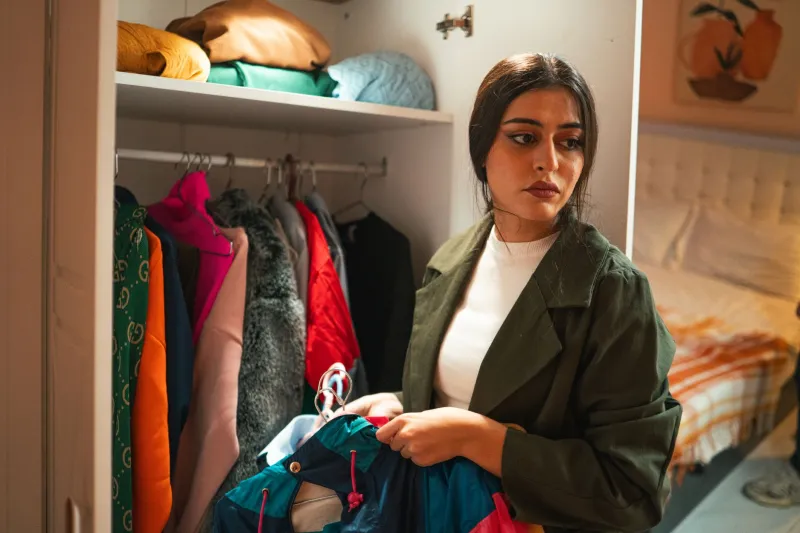
Here's a question nobody really asks when they're standing in front of their closet at 7:45 a.m., half-caffeinated and already running behind: Does this make me feel good, or am I just used to it?
There's a difference. A big one. And most of us have spent years — sometimes decades — confusing the two.
We talk a lot about decluttering. About capsule wardrobes and the magic number of pieces you're supposed to own. But almost none of that conversation gets at the real issue, which is purely emotional. Some clothes carry weight that has nothing to do with fabric. They carry guilt. Old versions of yourself. Money you spent and can't get back. Aspirations that have quietly expired.
This isn't a Marie Kondo moment. It's something a little more honest than that.
The Guilt Pile Is Real — And It's Bigger Than You Think
Let's start with the obvious stuff. You know the pieces. The blazer you bought because it was on sale and looked incredible on the mannequin. The dress you wore once to a wedding and have been "saving" for another occasion that never quite materializes. The running shoes that have seen approximately zero runs.
These items share something in common: every time you look at them, they remind you of something you didn't do, didn't become, or didn't follow through on. That's not neutral. That's a small tax on your morning energy, paid in the currency of mild disappointment.
The problem isn't that you bought them. The problem is that you're keeping them as a kind of punishment — or maybe as a promise to a future self who may never actually show up.
The Clothes You Actually Reach For Tell the Real Story
Here's a simple exercise that cuts through all the noise: for the next two weeks, pay attention to what you actually grab without thinking. The pieces that make it onto your body without deliberation — those are your real wardrobe. Everything else is furniture.
City life is already full of micro-decisions. What subway line to take. Whether to walk or grab a Lyft. Where to eat lunch when you have exactly 22 minutes. Your clothes shouldn't be adding to that cognitive load. The best pieces in your closet should feel like a relief, not another choice to negotiate.
If you have to talk yourself into wearing something — if you need to rationalize it, style it around its flaws, or remind yourself why you bought it — that piece is not working for you. You're working for it.
What "Feeling Good" Actually Means (It's Not What Instagram Says)
This is where things get personal, and they should. "Feeling good" in your clothes isn't about looking like you stepped out of a campaign shoot. It's about feeling aligned — like the outside matches something real on the inside.
For some people, that's a perfectly tailored pair of trousers that makes them feel sharp in a client meeting. For others, it's a worn-in denim jacket that's basically a second skin. Neither is more valid. What matters is the feeling, not the aesthetic category it falls into.
Ask yourself honestly: when you put this piece on, do you stand a little straighter? Do you feel more like the version of yourself you're trying to be — not the version you used to be, or the version you think you should be?
That distinction matters more than any trend cycle.
The Obligation Pieces: Clothes You Keep for Other People
Some of the heaviest pieces in your closet aren't heavy at all. They're perfectly lightweight, maybe even expensive. But they were bought — or kept — for someone else's approval.
The outfit your mom loves. The "professional" look you assembled for a job you no longer have. The style phase you went through when you were dating someone with very specific taste. These pieces don't represent you anymore, but getting rid of them feels weirdly disloyal.
Here's the thing: your wardrobe is not a museum. You don't owe anyone a permanent exhibit of who you used to be. Letting go of obligation pieces isn't betrayal — it's just honesty about where you actually are right now.
Aspirational Pieces: The Fine Line Between Motivation and Fantasy
Not all aspirational dressing is bad. Buying something because it represents where you're genuinely headed — a promotion you're actively working toward, a lifestyle you're building in real time — can be a legitimate investment in your future self.
But there's a version of aspirational dressing that's really just fantasy shopping. The leather pants you bought for the "edgier" version of yourself that you've never actually been. The ultra-formal suits hanging in the back because you might need them someday, even though your office has been business casual for six years.
The honest question to ask: is this aspirational in a direction you're actually moving, or is it a daydream you've been dragging around for three years?
If it's the latter, it's okay to let it go. You're not giving up on yourself. You're just getting clearer about who you actually are.
How to Do This Without Turning It Into a Weekend Project
You don't need to pull everything out of your closet on a Saturday morning and rebuild from scratch. That approach works for some people and completely overwhelms others.
Instead, try this: the next time you get dressed, pause for five seconds before you put something on. Ask yourself one question — am I choosing this, or am I defaulting to it? There's a difference between reaching for something because it genuinely makes you feel good and reaching for it because it's just... there.
Do that consistently for a few weeks and a pattern will emerge. The pieces that feel like a choice are the ones worth keeping. The ones that feel like a default, or worse, like an obligation — those are the ones worth questioning.
Building a Wardrobe That Actually Has Your Back
The goal here isn't a smaller closet. It's a more honest one. A wardrobe where every piece is something you'd actively choose, not just something you haven't gotten around to removing yet.
When you strip away the guilt, the obligation, and the expired aspirations, what's left tends to be genuinely good. The pieces that fit your actual life, your actual body, and your actual self — right now, not five years ago and not in some hypothetical future.
That's the wardrobe worth building. And honestly? It makes getting dressed in the morning feel a lot less like a negotiation and a lot more like something you actually look forward to.