Are Expensive Basics Actually Worth It? We Did the Math So You Don't Have To
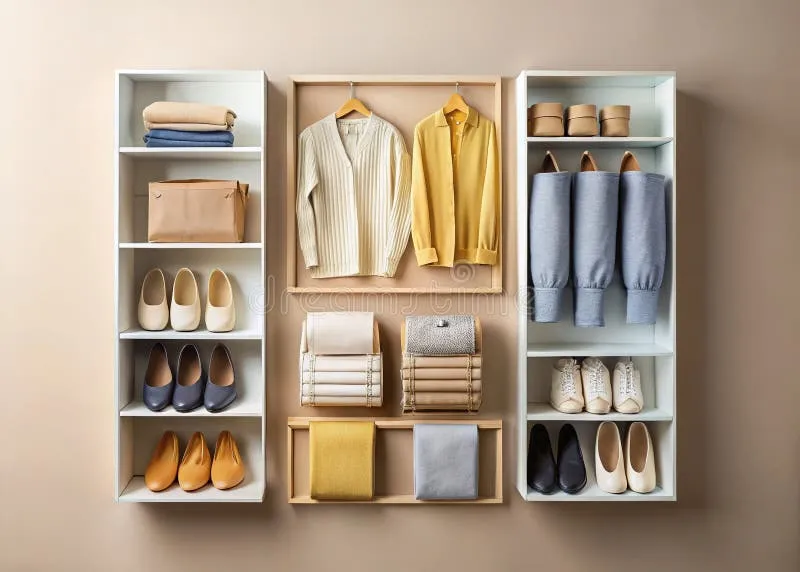
Photo: minimalist wardrobe basics neutral clothing folded flat lay, via thumbs.dreamstime.com
Somewhere between the rise of quiet luxury and the mainstreaming of "buy less, buy better," a specific belief took hold in certain city professional circles: that the smart move is always to spend more on the fundamentals. A $250 cashmere crewneck. A $180 white Oxford shirt. A $90 cotton t-shirt from a brand with a very clean website and a very vague origin story.
The pitch is seductive, and it's not entirely wrong. But it's not entirely right either — and for most urban professionals working with real budgets in real cities, following it too literally can quietly drain your wallet while delivering surprisingly modest returns.
Let's actually look at this.
The Cost-Per-Wear Framework (And Its Limits)
The standard defense of expensive basics goes like this: divide the price by the number of times you'll wear it. A $200 shirt worn 100 times costs $2 per wear. A $40 shirt worn 15 times costs $2.67 per wear. Therefore, the expensive shirt wins.
This math is real and useful — up to a point. The problem is that it assumes the expensive item will actually be worn significantly more often, which isn't always true. It also assumes the expensive item will hold up better over time, which — and this is the part the quiet luxury crowd glosses over — depends heavily on the specific product, not just the price tag.
Paying more does not automatically equal better durability. It sometimes equals better marketing.
What the Price Tag Is Actually Buying
When you spend $180 on a white Oxford shirt from a premium brand, your money is going to several different places. Some of it goes to fabric quality. Some goes to construction and finishing. A meaningful chunk goes to brand positioning, retail overhead, campaign photography, and the general cost of being perceived as a luxury product.
This isn't cynical — it's just how pricing works. The question is what ratio you're getting.
In genuinely premium basics, you're buying:
- Better raw materials: Higher thread counts, longer staple cotton, ethically sourced wool, tighter knit construction
- More careful finishing: Reinforced stitching, better buttons, cleaner seams that hold over time
- Fit consistency: Premium brands tend to be more size-consistent across runs, which matters for building a reliable wardrobe
In overpriced basics, you're buying:
- Brand association and aesthetic identity
- Minimalist packaging
- The feeling of having made a sophisticated choice
The trick is knowing which one you're actually holding.
Where Premium Basics Actually Justify the Price
Let's be fair: there are categories where spending more genuinely pays off for city professionals.
Wool coats and outerwear are probably the clearest example. A well-constructed wool overcoat from a brand with real manufacturing standards — think something in the $300-600 range — will outlast three or four cheaper versions. Outerwear takes constant abuse (weather, friction, daily use), and the quality difference between a $150 fast fashion coat and a $400 well-made one is usually visible and tangible. This is a buy-better situation.
Leather shoes and boots follow similar logic. Genuine leather with a proper sole can be resoled and maintained for years. The cost-per-wear on a $350 pair of quality leather boots worn regularly for 5-7 years is genuinely better than cycling through $80 pairs every 18 months.
Cashmere is interesting. Real cashmere from a reputable source does feel and perform differently than the $30 versions you find on flash sale sites. But the $300 cashmere crewneck from a trendy direct-to-consumer brand and the $120 cashmere from a solid mid-market retailer like Quince or a well-reviewed option from Everlane? The gap is much smaller than the price difference suggests. Do your research here before assuming expensive equals worth it.
Where the "Buy Better" Logic Falls Apart
Here's where it gets uncomfortable for the expensive basics crowd.
White t-shirts. There is no world in which a $90 white t-shirt makes financial sense for most people. White t-shirts stain, yellow at the collar, and degrade with washing regardless of what they cost at purchase. A mid-market option — think $20-35 from a brand with solid reviews on fabric weight and shrinkage — will serve you nearly identically over its lifespan. Spend the difference somewhere that matters.
Basic chinos and trousers. The $180 chino from a premium brand versus the $65 option from a solid mid-market retailer is a genuinely close call in most cases. Construction quality, fit, and fabric weight are the variables that matter — and those don't scale linearly with price. Banana Republic, J.Crew (on sale, always on sale), and similar brands routinely produce trousers that hold up as well as their pricier competition.
Plain crewneck sweatshirts. This is perhaps the most aggressively overpriced category in the quiet luxury era. A $160 French terry crewneck from a minimalist brand is doing the same job as a $45 option from a brand with a less curated Instagram presence. The fabric composition might differ slightly. The emotional experience of buying it will differ significantly. Only one of those things shows up in your bank account.
Where to Redirect Your Budget Instead
If you're going to spend money strategically on your urban wardrobe, here's where the ROI actually shows up:
Tailoring. A $40 pair of trousers that fits perfectly will always look better than a $200 pair that doesn't. Spend on alterations before you spend on upgrades.
Footwear. As mentioned, this is a genuine buy-better category. A quality pair of versatile leather sneakers or clean dress shoes in a neutral color will work harder in your rotation than almost any other single purchase.
Outerwear. One good coat that handles your city's actual weather, bought once, is better math than cycling through cheaper versions.
Statement pieces with staying power. A well-made structured blazer or a quality leather bag are places where craftsmanship shows and holds. These are worth the investment in a way that a premium white t-shirt simply isn't.
The Real Takeaway
The quiet luxury aesthetic sold a lot of people on the idea that spending more on less is always the sophisticated move. Sometimes it is. But sophistication isn't about price — it's about knowing exactly what you're buying and why.
For city professionals building a wardrobe that actually works, the smarter framework isn't "always buy the expensive version." It's "know which categories reward investment and which ones are just expensive for no reason."
Spend well on outerwear and shoes. Be strategic about suiting and structured pieces. And the next time someone tries to convince you that a $90 white t-shirt is a smart investment, do the math yourself.
You already know the answer.