One Outfit, Two Worlds: How to Go From the Office to the Bar Without Going Home First

Let's be honest: the "I need to run home and change" move is almost never about clothes. It's a comfort habit — the idea that work you and after-work you are different people who need different outfits. But in a city where your time is genuinely your most valuable resource, that 45-minute detour to swap a blazer for a flannel is a tax you don't have to pay.
The truth is, most urban professionals are carrying two wardrobes in their heads when they only need one. The pieces you wear to a Tuesday afternoon meeting and the pieces you wear to a Thursday evening out at a wine bar aren't as different as you think. They just need to be chosen more intentionally.
Here's how to make it work.
The Misconception Worth Calling Out
Somewhere along the way, we absorbed the idea that "work clothes" are stiff, formal, and serious — and that "going out clothes" are relaxed, expressive, and fun. That binary made sense in an era of mandatory suits and strict dress codes. It doesn't reflect how most American professionals actually dress in 2024.
Modern offices — even relatively formal ones — have shifted toward elevated business casual. That shift created a massive overlap zone between what reads as professional and what reads as socially sharp. A well-fitted merino polo, dark slim trousers, and leather sneakers can sit comfortably on both sides of that line. The problem is most people don't build their wardrobe to exploit that overlap. They keep buying duplicates instead.
The 3-Piece Pivot System
The transformation strategy isn't about a complete outfit change. It's about identifying three categories of pieces that do double duty — and making sure you own strong versions of each.
Piece 1: The Anchor Bottom
Your trousers or pants are the foundation of this whole system. They need to read professional in a conference room and relaxed enough for a cocktail bar without looking like you forgot to go home.
Dark slim chinos are the obvious choice here — navy, charcoal, or olive. They're not jeans (which still raise eyebrows in some office environments) and they're not dress trousers (which feel stuffy at a casual dinner). They live in the middle, which is exactly where you want them.
If your office is more casual, dark-wash straight-leg jeans with zero distressing can absolutely anchor this system. The key word is dark — lighter washes read more casual and less versatile across contexts.
Invest in a fit here. A pair of well-tailored chinos from a brand like Banana Republic, Bonobos, or Todd Snyder will carry you further than three pairs of mediocre ones.
Piece 2: The Transformable Top Layer
This is where the actual pivot happens, and it's simpler than most people expect. You're not changing your shirt — you're changing what's over it.
Wear a clean, well-fitted button-down or a structured knit to the office. During the workday, layer a blazer or sport coat over it. That combination signals professionalism without effort. Then, when 5:30 hits, lose the blazer and let the shirt or knit breathe on its own. Instantly, the outfit reads more relaxed and social.
Alternatively, go the other direction: wear a fitted tee or crewneck under a more casual jacket during the day, then swap the jacket for a clean overshirt or lightweight bomber when you head out. Same bottom half, completely different energy on top.
The rule is simple: your top layer is a dial, not a switch. You're not changing it — you're adjusting it.
Piece 3: The Footwear Anchor
Shoes are the fastest way to shift an outfit's register, and they're also the piece most people get wrong in this system. If you're wearing formal dress shoes to the office, you're making the after-work pivot harder than it needs to be. If you're in chunky sneakers all day, you might struggle to look polished in a client meeting.
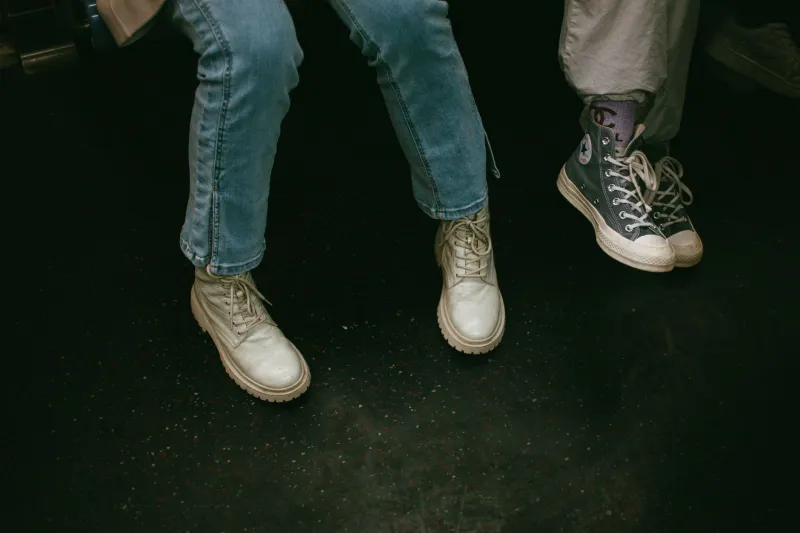
The sweet spot is a clean leather sneaker or a simple Chelsea boot. Both work in professional settings when the rest of the outfit is appropriately elevated. Both work in social settings without looking like you're still in work mode. Brands like Common Projects, Koio, or even the more accessible Oliver Cabell offer options that genuinely work in both worlds.
This is the one area where spending more typically pays off. A beat-up sneaker undermines even a great outfit; a clean, quality shoe elevates a simple one.
The Bag Situation
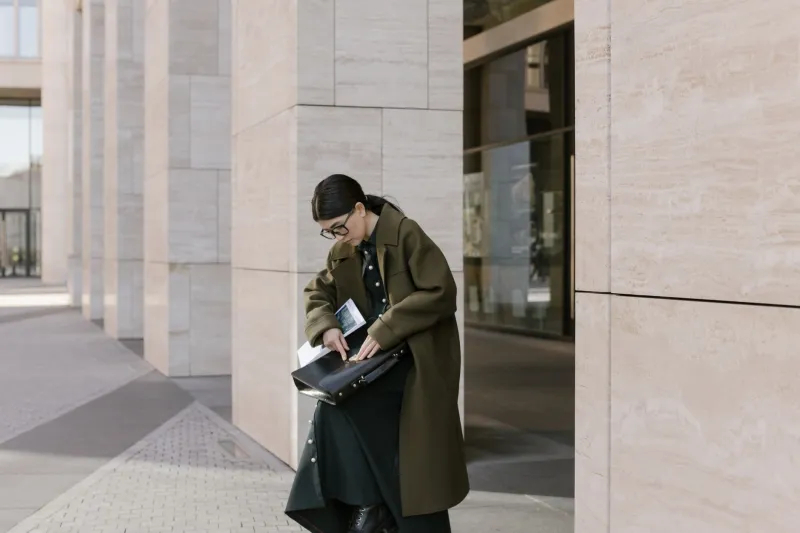
One thing that often gets overlooked in the desk-to-drinks conversation: your bag. A large laptop backpack or a structured briefcase signals "still at work" in a way that's hard to shake, even if your outfit is perfect.
The fix is either a bag that works across contexts (a slim leather tote or a minimal canvas carryall reads well in both settings) or the habit of stashing a smaller crossbody or clutch inside your work bag. When the workday ends, transfer your essentials, leave the laptop bag at the office or in a locker, and walk out looking like you dressed for the evening.
It's a small move that makes a disproportionate difference.
The Actual Investment Case
Here's the argument that tends to land: if you're buying work clothes and social clothes separately, you're spending twice as much on a wardrobe that's doing half the work. A well-chosen piece that earns its place in both contexts isn't an indulgence — it's the more economical choice.
A $180 pair of dark chinos that you wear four days a week to the office and three weekends a month is a better investment than two $90 pairs that each only work in one setting. The math is pretty straightforward.
Build toward a smaller, more intentional closet rather than a larger one full of single-use pieces. That's not minimalism for minimalism's sake — it's just smarter city living.
A Real-World Formula to Walk Out the Door With
If you want a starting point, here's a combination that genuinely works across both contexts:
At the office: Dark slim chinos + fitted white Oxford + unstructured navy blazer + white leather sneakers
After work: Same chinos + same shirt (untucked or one button open) + blazer off or swapped for a bomber + same sneakers
Total changes made: one jacket swap, one button undone. Total time spent: 90 seconds in the bathroom mirror.
That's the whole system. It's not complicated — it just requires buying with intention from the start.