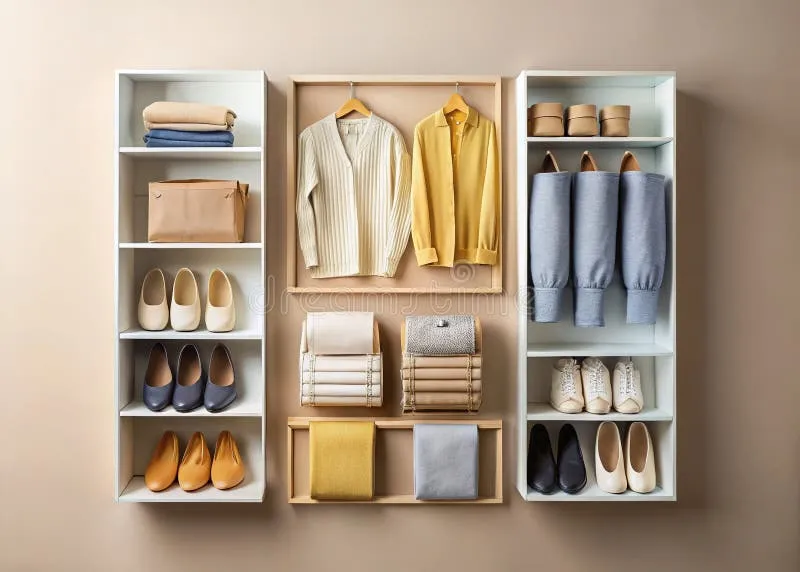
Buying Less, Keeping More: How Urban Professionals Are Quietly Rebuilding Their Closets
There's a moment a lot of people seem to be having right now. You open your closet, stare at a rail packed with clothes, and still feel like you have nothing to wear. Sound familiar? For a growing number of urban professionals across the US, that moment became a turning point — not toward more shopping, but toward something more deliberate entirely.
The shift away from fast fashion isn't new, exactly. But what's different now is who's doing it. It's not just the sustainability crowd or the minimalism enthusiasts. It's regular city dwellers — commuters, creatives, corporate climbers — quietly deciding that a closet full of "good enough" pieces isn't actually good enough anymore.
The Overstuffed Closet Problem Nobody's Talking About
Fast fashion made it easy to keep buying. Prices stayed low, trends moved fast, and the dopamine hit of something new never really got old. But after a few years of that cycle, a lot of people started doing the math — not just financially, but emotionally.
Marcus, a project manager in Chicago, put it plainly: "I had probably 40 shirts. Maybe wore 8 of them regularly. The rest just took up space and made me feel vaguely guilty every time I opened the closet." He spent two years gradually replacing that volume with fewer, better pieces. "I actually enjoy getting dressed now. That sounds small, but it's not."
That guilt Marcus mentions is worth sitting with. Research in consumer psychology consistently shows that owning things we don't use creates low-grade mental clutter. In a city where your physical space is already at a premium, your closet shouldn't be adding to the noise.
What's Actually Driving the Change
A few forces are colliding at once. First, there's the economic reality check. Inflation hit, rent went up, and suddenly the idea of spending $30 on a shirt that falls apart in six months started feeling less like a deal and more like a trap. People are doing the cost-per-wear calculation, and the numbers favor quality.
Then there's the environmental awareness that's finally gone mainstream. You don't have to be an activist to feel a little uneasy about the sheer volume of textile waste the fashion industry generates each year. The EPA estimates that Americans throw away about 11.3 million tons of textile waste annually. That's not an abstract statistic when you're looking at a pile of clothes you never wear.
And honestly? There's a style angle too. The "more is more" aesthetic has quietly ceded ground to something cleaner, more considered. The people who look genuinely put-together in cities — the ones whose outfits feel intentional rather than assembled — tend to be working with less.
The Psychology of Intentional Dressing
There's something almost counterintuitive about the way a smaller, curated wardrobe makes decision-making easier. When every piece you own is something you actually like, getting dressed becomes less about negotiating with your closet and more about expressing something real.
Dr. Amanda Pierce, a behavioral psychologist based in New York, describes it as reducing "decision fatigue at the source." The fewer low-quality options you have to filter through, the more mental energy you conserve for everything else your day demands. For professionals who are already making dozens of high-stakes decisions before noon, that's not a trivial benefit.
Nadia, a marketing director in Atlanta, noticed the shift after doing a full closet audit. "I got rid of anything I hadn't worn in a year, anything that didn't fit well, and anything I only bought because it was on sale. What was left was maybe a third of what I started with — and it was all stuff I genuinely loved." She hasn't replaced most of what she donated. "I thought I'd feel like I didn't have enough. I feel like I finally have exactly enough."
A Practical Framework for Evaluating What Stays
If you're thinking about making this shift yourself, the good news is you don't have to overhaul everything at once. The goal isn't a capsule wardrobe by next Tuesday — it's building a more honest relationship with what you own and what you buy.
Here's a simple framework worth running any piece through, whether it's already in your closet or sitting in your cart:
Does it fit well, right now? Not "it'll fit when" or "it fits fine." Does it actually fit the body you have today? Fit is the single biggest factor in whether something looks intentional or accidental.
Can you wear it at least three different ways? Versatility is the real value metric in a city wardrobe. A piece that works with three other things you own earns its space. One that only works in one specific combination probably doesn't.
Would you buy it at full price? Sale price is how fast fashion gets you. If the only reason something's in your cart is the discount, that's a red flag worth heeding.
Is the quality proportional to how often you'll wear it? Everyday basics — your go-to trousers, your reliable blazer, your white button-down — deserve the best quality you can reasonably afford. Trend pieces you'll wear twice? Less so.
How do you feel when you put it on? This one sounds soft, but it matters. Clothes that make you feel good aren't a luxury — they're a return on investment every single time you reach for them.
Shopping Differently, Not Just Shopping Less
One thing worth saying clearly: this isn't about never buying anything new. It's about buying with more intention. The professionals who've made this shift aren't anti-shopping. They're just slower about it, pickier about where they spend, and more willing to wait for the right thing rather than settling for whatever's available right now.
That might mean saving up for a coat that'll last a decade instead of cycling through three cheaper versions. It might mean investing in a great pair of trousers from a brand with solid construction rather than grabbing whatever's trending this season. It might mean discovering that secondhand and vintage markets carry better quality than most fast fashion retailers at a fraction of the price.
The bottom line is this: your wardrobe is one of the few things you interact with every single day. It shapes how you feel walking into a meeting, how you carry yourself on the subway, how you present yourself to the world. That's worth being thoughtful about.
The city professionals who are getting this right aren't buying more. They're buying better — and finding out that less, done well, goes a lot further than more, done cheaply.