The 33-Piece Fantasy: Why Real Style Doesn't Fit in a Numbered List

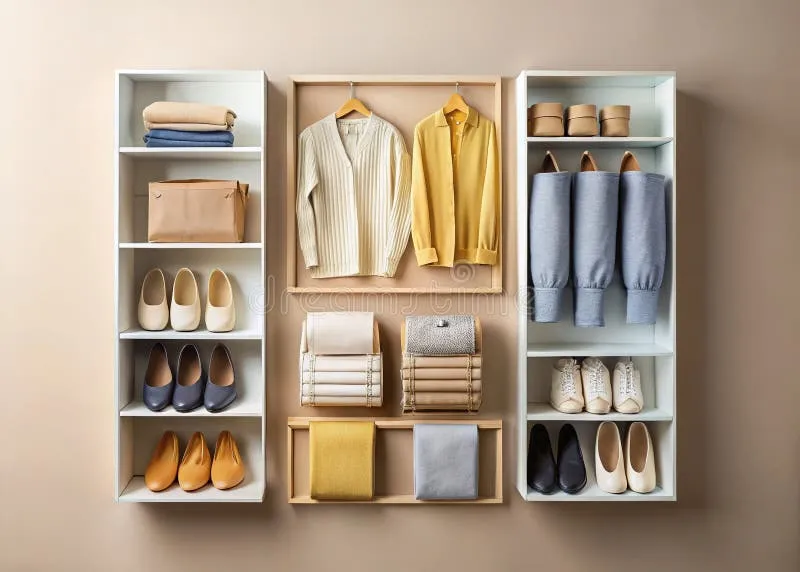
Every few months, a new wave of capsule wardrobe content floods the internet. The formula is familiar: a crisp flat lay of neutral basics, a confident number (33 pieces, 40 pieces, sometimes a daring 10), and the promise that this — finally — is the system that will fix your closet anxiety forever.
And every few months, millions of people read it, feel briefly inspired, and then open their actual closet and feel worse than before.
So what's going wrong? And more importantly, what are genuinely well-dressed city professionals actually doing instead?
The Capsule Wardrobe Sounds Perfect Because It's Theoretical
The appeal is real. The idea that you could reduce your wardrobe to a tight, curated set of pieces — each one intentional, everything interchangeable — is genuinely seductive. No more decision fatigue. No more "nothing to wear" spirals on a Tuesday morning when you're already running late for a 9 a.m. meeting.
But here's the thing capsule wardrobe content almost never acknowledges: it's built around an idealized life, not an actual one.
Think about what a real week in a major US city actually looks like for a working professional. Monday might be a full day of back-to-back client meetings. Tuesday, you're working from home in a heat wave. Wednesday there's a birthday dinner after work you forgot about until noon. Thursday you're presenting to leadership. Friday is casual, until it isn't, because your boss wants to grab drinks with a potential partner at 5:30.
That's five days and at least eight different dressing contexts. A 33-piece wardrobe built around "classic neutrals" is not equipped to handle that range — not honestly, anyway.
What Stylish People Actually Own
We talked to a handful of city-based professionals who consistently get complimented on their style — the kind of people whose outfits look intentional without looking like they tried too hard. The throughline in their closets wasn't minimalism. It was clarity.
Marcus, a 34-year-old product manager in Chicago, laughed when we brought up the capsule wardrobe concept. "I've probably got 80 pieces," he said. "But I know exactly what each one is for. I don't have a lot of random stuff I'm holding onto out of guilt."
That distinction — between volume and chaos — is the one capsule wardrobe content consistently conflates. The goal was never really about owning fewer things. It was about owning fewer wrong things.
Diana, a 29-year-old attorney in Washington D.C., put it even more plainly: "I tried the capsule thing twice. Both times I ended up buying things I thought I should want and then never wearing them. My actual wardrobe has more pieces, but I wear almost all of them."
The Psychology of the Perfect Closet
There's a reason capsule wardrobe content performs so well and also why it so rarely sticks. It taps into the same psychological loop as most organizational content: the fantasy of the optimized self.
In that fantasy, you're a slightly different person — more disciplined, more consistent, with a lifestyle that maps cleanly onto a Pinterest grid. You eat the same healthy lunch every day, you have a consistent morning routine, and you wear your navy blazer three different ways without getting bored of it.
Real people are messier than that. Moods shift. Bodies change with the seasons, or after a stressful stretch, or just because it's been a few years. Some weeks you want to disappear into a hoodie. Other weeks you want to show up to the office in something that makes people ask where you got it.
None of that is a character flaw. It's just being human. And a wardrobe philosophy that doesn't account for human variability isn't actually a useful philosophy — it's an aesthetic.
The Number Is the Wrong Starting Point
Here's a reframe that actually helps: instead of starting with a target number of pieces, start with a target number of contexts.
Map out the real categories of your life — not the aspirational ones. For most urban professionals, that looks something like: serious work days, casual work days, remote days, weekend errands, active stuff, going out, and a few wildcards (weddings, job interviews, that one friend who always picks places with a dress code).
Once you have those buckets, you can start asking whether your closet is actually serving each one — or whether you're over-indexed in some areas and completely unprepared in others. A lot of people, it turns out, have seventeen slightly different versions of "business casual" and absolutely nothing appropriate for a summer rooftop birthday.
The point isn't to have fewer pieces. The point is to have fewer gaps.
What a More Honest Closet Framework Looks Like
Rather than chasing a number, think about your wardrobe the way a good editor thinks about a magazine: every piece should earn its place, but the criteria for earning it are specific to your actual life, not someone else's template.
A few principles that actually hold up in the real world:
Wear rate matters more than piece count. If you own 70 items and wear 65 of them regularly, you're doing better than someone with 30 pieces they half-love. Track what you actually reach for — even informally — for a month. The picture gets clear fast.
Guilt pieces are the real problem. Most wardrobe clutter isn't excess — it's expensive mistakes you're holding onto because getting rid of them feels like admitting defeat. Donate them. The closet space is worth more than the sunk cost.
Interchangeability is a feature, not the whole product. Yes, pieces that work together make getting dressed easier. But a wardrobe with no personality, no statement, no things-you-just-love is also a wardrobe that makes getting dressed kind of boring. Leave room for that.
Build for your worst week, not your best self. The capsule wardrobe is designed for the version of you who has energy and time. Your closet also needs to work on the weeks when you don't. That means easy options, comfortable options, options that require zero thought and still look pulled together.
The Real Goal Was Never the Number
The best-dressed people you know probably didn't get there by following a 33-piece plan. They got there by paying attention — to what works on their body, to what fits their actual life, to what makes them feel like themselves rather than a more organized, more neutral version of themselves.
That's a slower process, and it's a lot harder to package into a listicle. But it's the one that actually sticks.
Your closet doesn't need to be minimal. It needs to be yours.